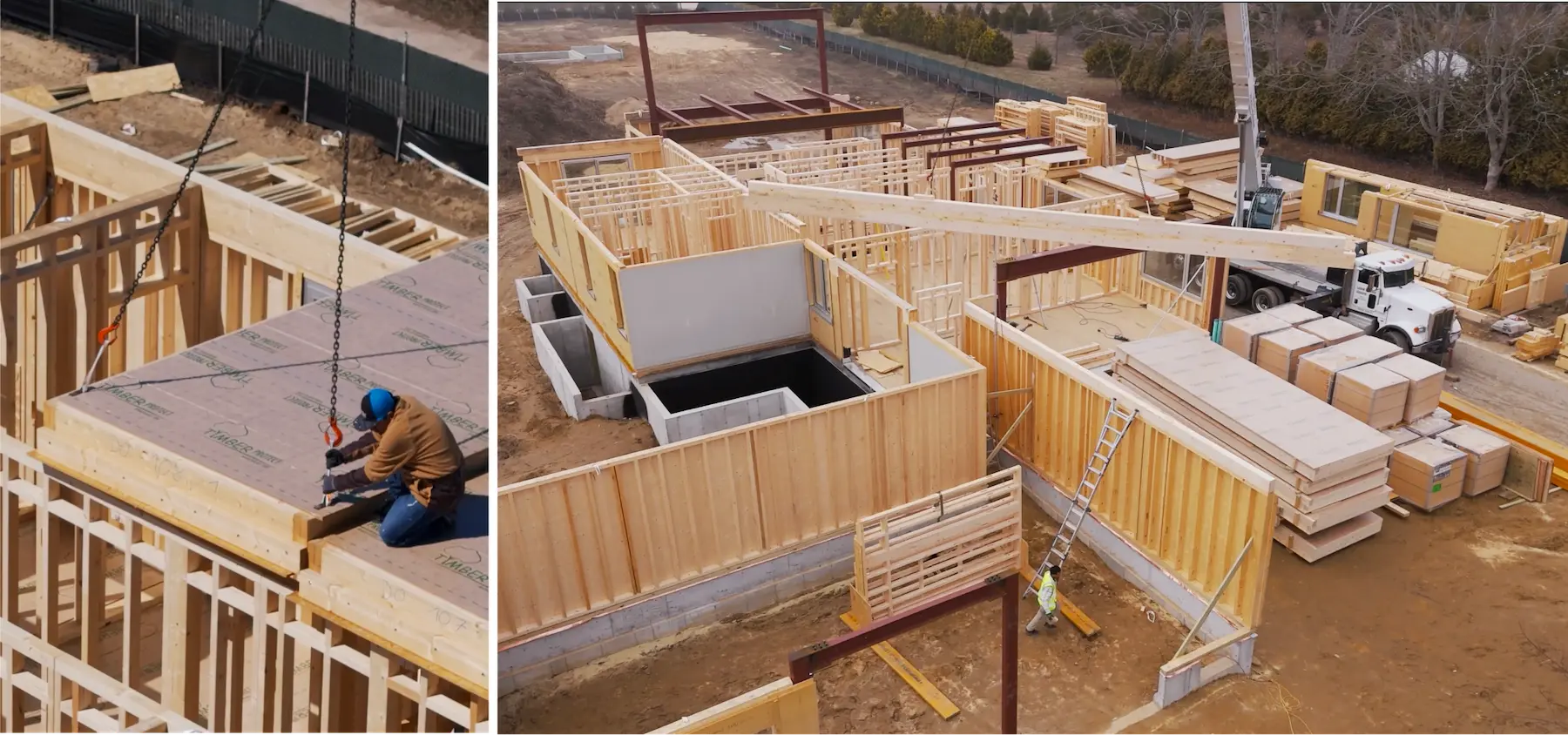

With today’s housing market pushing prices higher and inventory staying tight, many buyers are starting to ask a different question: Should I build instead of buy?
For many people, the answer is yes. Financing a new construction or custom-built home can actually be a smarter financial decision—especially if you’re considering purchasing land, building a primary residence, adding an ADU, or demolishing and rebuilding an older home.
But construction financing works differently than a traditional mortgage. Before you start shopping for land or hiring a builder, it’s important to understand how the financing process actually works. And because of the complexity and high financial stakes, it’s critical to work with an accredited expert. “I’ve run simple questions about financing and loans for land and construction loans, and tested ChatGPT for guides and explanations, and nine times out of 10, what I get is inaccurate,” says Hilary von Maur of AnnieMac Home Mortgage.
Below is a practical roadmap to help you navigate construction financing in the U.S., with insights from von Maur of AnnieMac, an expert in construction and residential lending across the US.
In many markets, buying an existing home means:
All construction loans are interest-only until the final Certificate of Occupancy is issued. You only pay on the amount you have drawn on for the construction, or if you have taken funds for the land purchase.
Building a home gives you stronger control over both the design and the financial structure of the project.
As Hilary von Maur explains:
“People are surprised when they realize construction can actually be the more efficient financial decision. With a renovation or a new construction, you have built-in equity once the home is completed. Instead of paying a premium for an existing home and then renovating, you can plan the entire project from the beginning.”
When it comes to construction loans, key advantages include:
In some areas, local transfer taxes apply to the purchase price of a home or property. In parts of New York, that includes a 2% preservation fund tax on real estate purchases.
When you buy land and build:
This can create meaningful savings.
“When you do a construction loan, you’re not paying that preservation tax on the cost of construction—only on the land,” says von Maur. “If you’re building a multi-million dollar home, that difference can be significant.”
With a construction loan, your financing is based on:
Instead of overpaying for an existing property and renovating later, you will be able to structure the project financially from day one.
Additional Read:
Your BuildLabs Guide to Payment Schedules and Construction Loans
Because lenders evaluate construction loans based on the future value of the completed home, many borrowers begin with built-in equity once construction is finished.
This can be especially beneficial in markets where new homes command premium prices.

Before you buy land or sign a construction contract, the most important step is pre-qualification.
Pre-qualification helps determine:
This allows you to realistically evaluate whether your construction plan fits within lender guidelines.
Hilary von Maur emphasizes that this first step is often simpler than borrowers expect.
“Once I review the basic information, I can give someone a number or a range they qualify for and we can have a more comprehensive conversation about what the land plus construction is going to cost.”
When qualifying borrowers for construction loans, lenders generally evaluate two main income categories.
For salaried or hourly employees, documentation is straightforward.
Typical documents include:
“If someone is W-2 income, I usually start simple—two years of W-2s, one month of pay stubs, and two months of bank statements,” von Maur explains. “I try not to overwhelm people with paperwork.”
Self-employed borrowers often worry that the process will be complicated.
In reality, lenders typically review:
“Some self-employed borrowers think the process is complicated,” says von Maur. “But I’ve never come across a tax return I don’t understand. Usually, once I review the two years of returns, I know exactly what additional information I need.”
Another important step in the qualification process is reviewing credit.
Agents like von Maur can do a soft credit pull, which allows them to review credit details without impacting a borrower’s score.
“A soft pull is a fabulous tool,” von Maur says. “It allows me to see all three credit bureau scores and the liabilities on the credit report without negatively affecting someone’s credit.”
This provides a complete snapshot of:
Mortgage qualification is largely based on a simple formula:
Income vs. Liabilities
Lenders evaluate your debt-to-income ratio (DTI) using the minimum monthly payments associated with your debts.
These typically include:
One point that surprises many borrowers is that lenders focus on monthly payment amounts—not total balances.
“People sometimes panic about their student loan balances, for example,” von Maur explains. “But what we’re actually looking at is the minimum monthly payment. Qualification is a ratio of income versus liabilities.”
Once a borrower is pre-qualified, the next step is determining the total project cost.
This includes:
For example:
If the lender requires a 20% down payment, the borrower would typically need $600,000 plus closing costs.
And von Maur notes that this stage often helps bring clarity to the financial planning process.
“When people come to me, they’ll often say how much they want to put down. Once I run the numbers, we can quickly see whether the project fits within lender guidelines.”
She adds that this often leads to productive conversations about project scope.
“Someone might say they want a $3 million construction project. Once we review the numbers together and understand the way lenders view the numbers, we might need to adjust the loan amount to fit lender guides.”
Additional Read:
How Much Does It Cost to Build a Custom Home - Essential Information
Construction financing has evolved significantly over the past decade.
Historically, borrowers often used a two-closing construction loan, which required:
Today, many lenders offer construction-to-permanent loans, which streamlines the process by combining everything into a single loan structure that is available at rates similar to competitive rates for the purchase of an existing home. With a one-time close, the construction loan will convert to the ‘end loan’ upon receiving the final Certificate of Occupancy, thus saving the borrower a second set of closing costs.
Funds are typically released in stages known as draws as the home is built.
Builders may use different construction methods, including:
These options can all be financed depending on lender guidelines and the specifics of the project.

If you already own land, financing can become even more advantageous.
The land can often be used as equity toward the project, reducing the amount of cash needed for the construction loan.
This scenario is common for:
To begin the pre-qualification process, most lenders request a simple set of documents. These typically include:
“Eventually we’ll need verification of someone’s current housing,” von Maur notes. “But I try to start with the basics so the process feels manageable.”
Once your financial information is reviewed, your lender should provide a clear snapshot of the financing structure.
This typically includes:
“After the initial qualification, I send clients a package with proposed pricing and product options so they can see what the monthly payments might look like,” says von Maur.
Building a home may feel intimidating at first, but for many buyers it can be the smartest path in today’s housing market.
Instead of overpaying for an existing property and renovating later, construction financing allows you to:
The key is starting with the right financial roadmap before buying land or beginning construction.
“The most important step is understanding what you qualify for,” von Maur says. “Once you know that number, the rest of the conversation becomes much easier.”
For buyers considering land purchases, custom homes, ADUs, or demolition-to-build projects, starting with a clear financial plan makes the entire construction process far more predictable—and far less overwhelming.
.png)